Digital experience is shifting again - not gradually, but decisively.
The old playbooks are fading. The familiar roles are evolving. And the teams that once powered enterprise CX are discovering that the skills they relied on even two years ago no longer match the platforms they’re expected to deliver on.
2026 is the year where AI becomes the default, composability becomes the norm, and cross‑platform fluency becomes the most valuable currency in the DXP talent market.
This is what’s changing and why it matters.
AI used to sit at the edges of the DXP ecosystem. but that era is over.
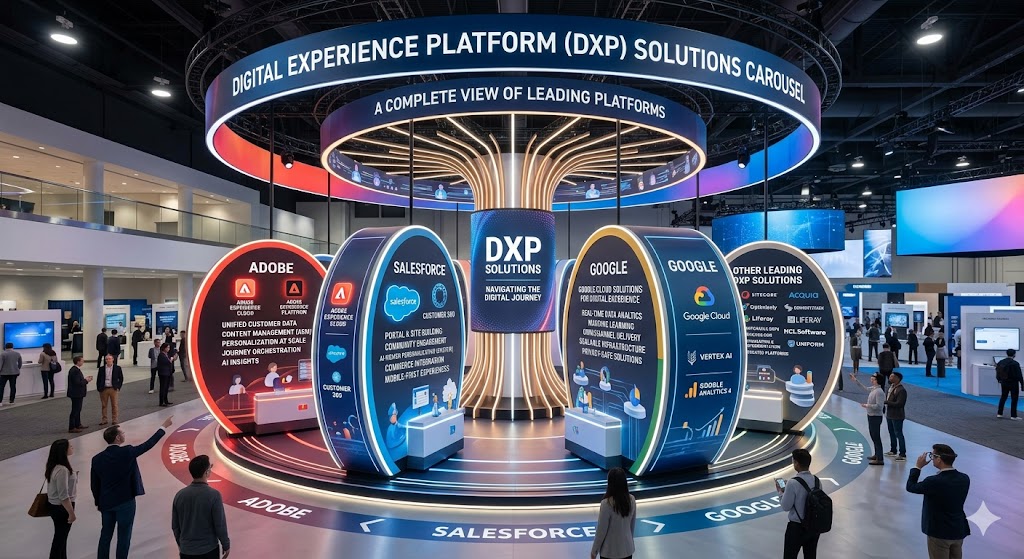
Adobe is infusing AI into every layer of AEP and AJO. Salesforce is pushing Agentic AI into Data Cloud and CRM. Google is turning BigQuery + Vertex AI into the intelligence layer for the entire marketing stack.
This means CX teams now need people who can design experiences around intelligence, not just configure rules or journeys.
The new reality looks like this:
And that means the talent behind these systems must evolve too.
The monolithic DXP is dissolving.In its place: a modular, mix‑and‑match ecosystem where brands combine the best of Adobe, Salesforce, Google and specialist microservices.
It’s powerful, but it breaks the traditional team structure.
Instead of siloed specialists, organisations now need:
Composability isn’t just a technology shift.It’s a talent shift.
In 2026, every CX initiative starts with data and ends with activation.
AEP, Salesforce Data Cloud and BigQuery have become the gravitational centre of the DXP universe.Everything else orbits around them.
This means the most valuable people in the room are no longer the ones who know a single platform deeply, but the ones who understand:
The DXP team of the future is a data team with CX responsibilities, not the other way around.
Here’s the most important shift of all: The market is no longer looking for “an AEM Developer” or “a Salesforce Consultant” or “a Google Data Engineer”.
It’s looking for the person who can work across all three.
The hybrid is now the unicorn:
These roles didn’t exist five years ago.Today, they’re the difference between a CX programme that launches and one that stalls.
The platforms have evolved, the architectures have evolved, and the expectations have evolved, but the hiring market hasn’t.
Here’s what’s breaking:
Hybrid skills are scarce: Most professionals grew up in single‑vendor ecosystems.Cross‑platform fluency is still emerging.
Job descriptions are outdated: Teams are still hiring for 2019 responsibilities with 2026 technology.
Technical vetting is inconsistent: Hiring managers know their own platform, but not the adjacent ones.This leads to mis‑hires, slow processes and unclear evaluation.
The market moves faster than the hiring process: The best candidates are off the market in days.Most organisations take weeks.
Vendors don’t train for cross‑platform reality: Adobe doesn’t teach BigQuery.Google doesn’t teach AEP.Salesforce doesn’t teach AJO.But modern CX requires all three.
The result? A widening capability gap between what brands want to deliver and what their teams are actually equipped to build.
AI is reshaping the DXP landscape; Composability is redefining how platforms fit together; Data is becoming the organising principle of every CX team; and hybrid, cross‑platform talent is becoming the most valuable asset in the market.
The organisations that recognise this shift, and adapt their hiring strategy accordingly, will be the ones who deliver the next generation of intelligent, real‑time, predictive customer experiences.